Home / Our Focus / Strengthen Resilience / Downspout Planter Projects

Downspout Planter Projects

Sustainable Princeton has completed two downspout planter installation projects across the community.

In August of 2021, ten downspout planters were installed in the Witherspoon Jackson S.T.A.R. Neighborhood with funding from a S.T.A.R. mini-grant. The planters were built with support from a group of Princeton University Community Action students.

In 2024, Sustainable Princeton received a grant from HDR to build and install downspout galvanized steel planters in underserved, flood-prone neighborhoods in Princeton.

What's a Downspout and Why Do They Matter in Princeton?

Downspout planters are containers filled with plants placed under downspouts that collect stormwater runoff. This is a form of green infrastructure that helps retain some of the stormwater that would otherwise flood a person’s house or overwhelm the stormwater sewer system.

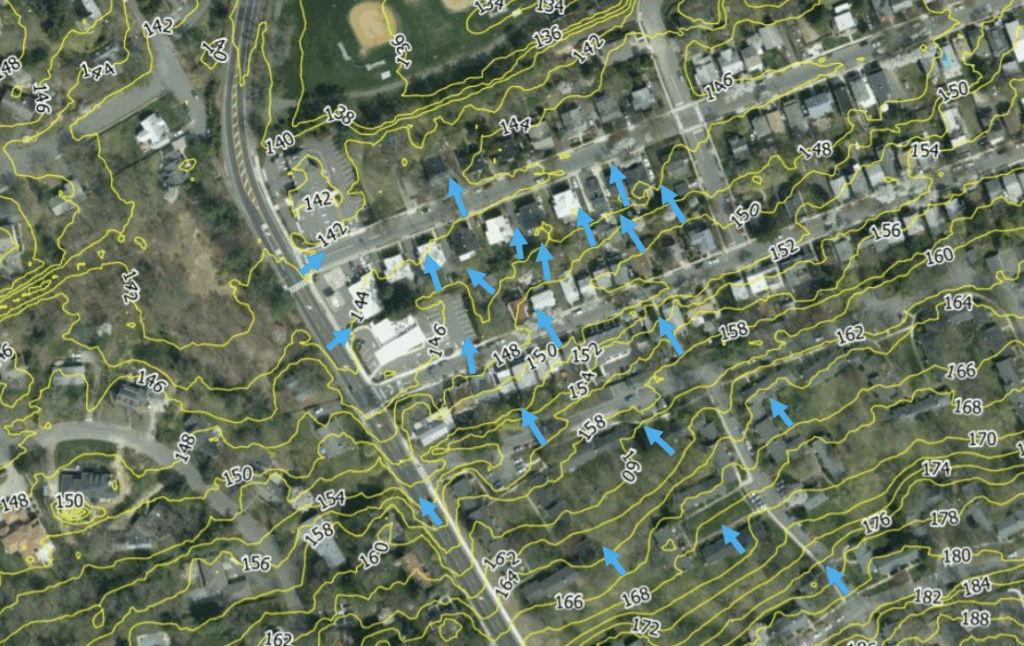
In Princeton, we are a particularly flood-sensitive community. Our stormwater sewer system is old, and with climate change comes heavier rainfalls. “A neighborhood Stormwater Analysis prepared by The Watershed Institute in 2020 demonstrates how water rushes downhill through the Witherspoon Jackson neighborhood until the land flattens around Birch and Leigh Avenues, where it tends to pool, flooding yards and houses.”

Downspout planters are a great option for homes that can’t install permanent green infrastructure like a rain garden. Downspout planters help reduce flooding by retaining some of the rainwater, utilizing some of it to water plants in the planter, and slowly releasing any excess, giving the sewer system time to process stormwater runoff from streets, roofs, driveways and other hard surfaces. Native plant species are best suited to downspout planters as they have adapted to both the wet and dry weather we experience in New Jersey.

WJN topographical map
Topographical map of the Birch Ave neighborhood depicting how stormwater flows off the landscape as a whole. The topo lines that are closer indicate a steeper slope which will mean that water will flow faster away from these areas. Birch Ave is located in a much flatter area as noted by the space between the topo lines. This means that the water from uphill is being captured around Birch Ave and allowing it to slow down before it would naturally flow towards the wetlands.