
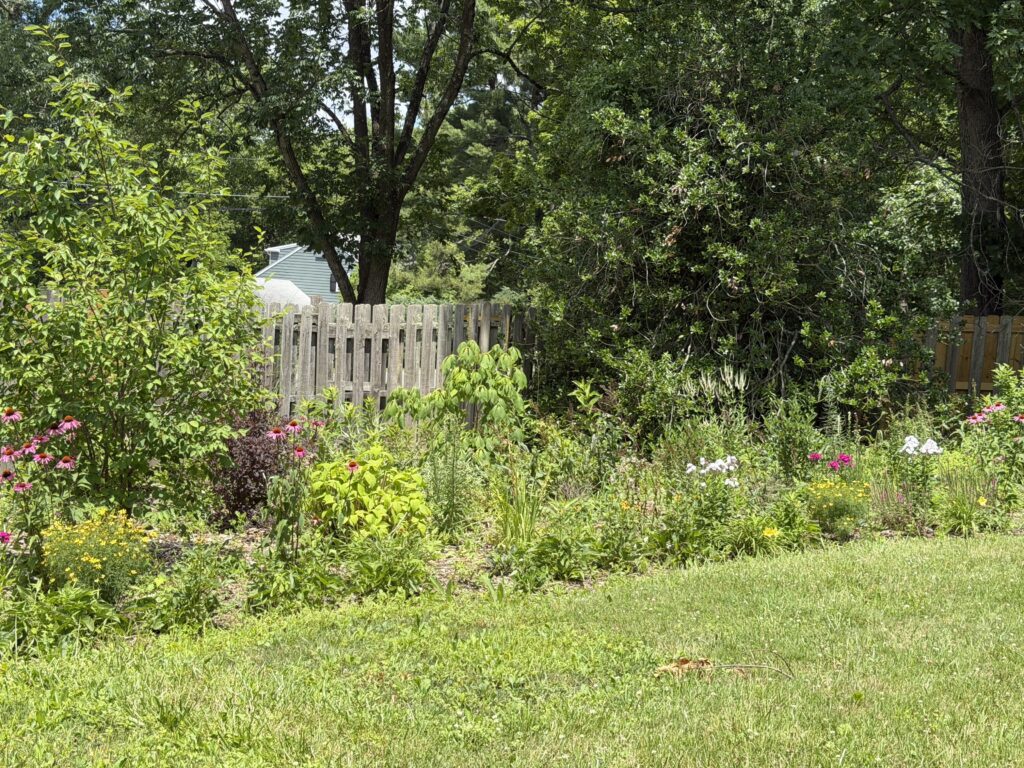
Eve Coulson, the past President of Sustainable Princeton’s Board of Trustees, has been working to convert her yard into a meadow for several years. After meeting Nanci, the owner of Horticultural Management, at our Sustainable Home Expo in 2025, Eve has a new plan to tackle this project, thanks to Nanci’s guidance. We interviewed Eve and Nanci over the past year to learn more about the process of converting a grass lawn to a meadow of native plants and what to expect during the transformation.
Sustainable beginnings
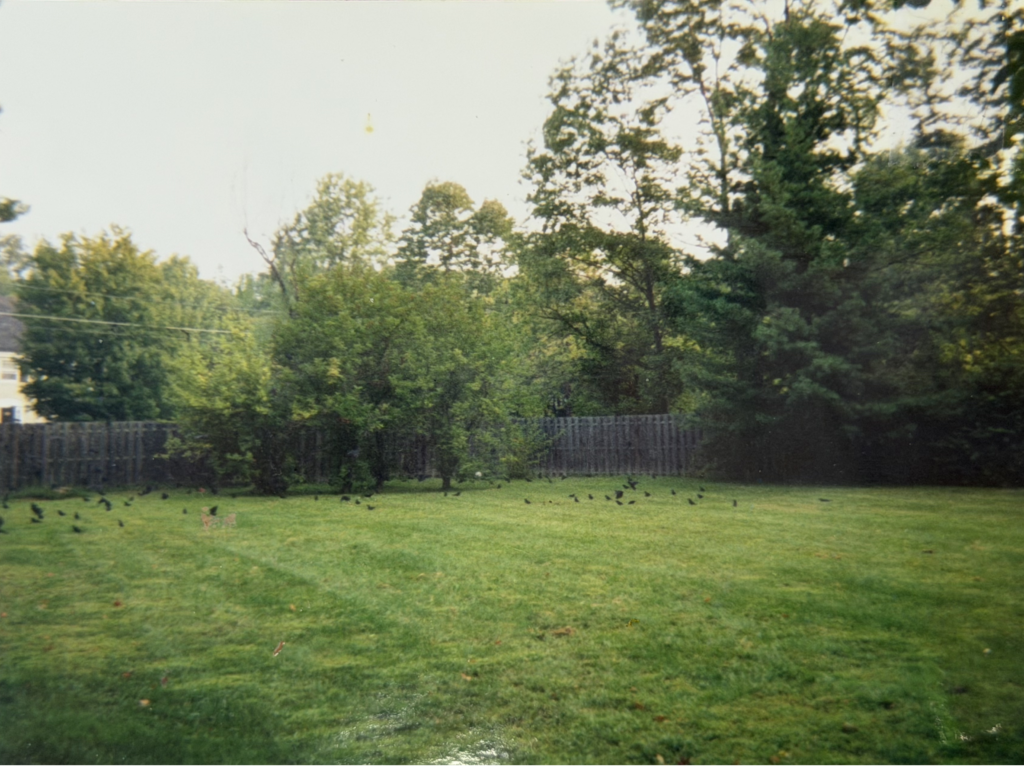
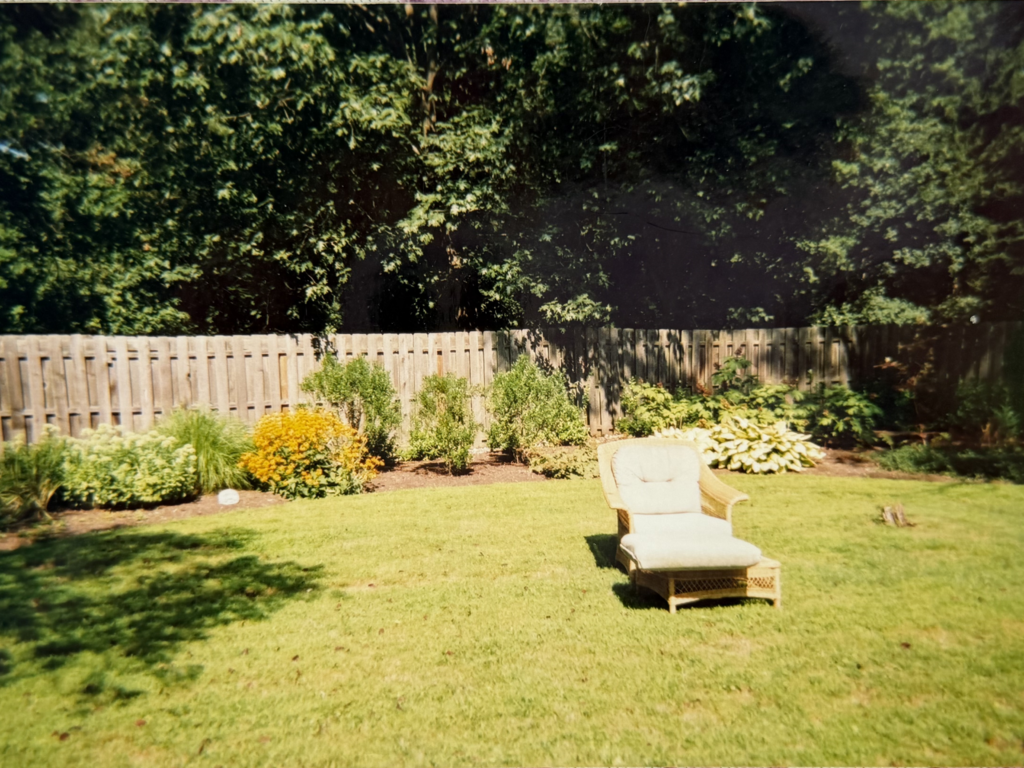
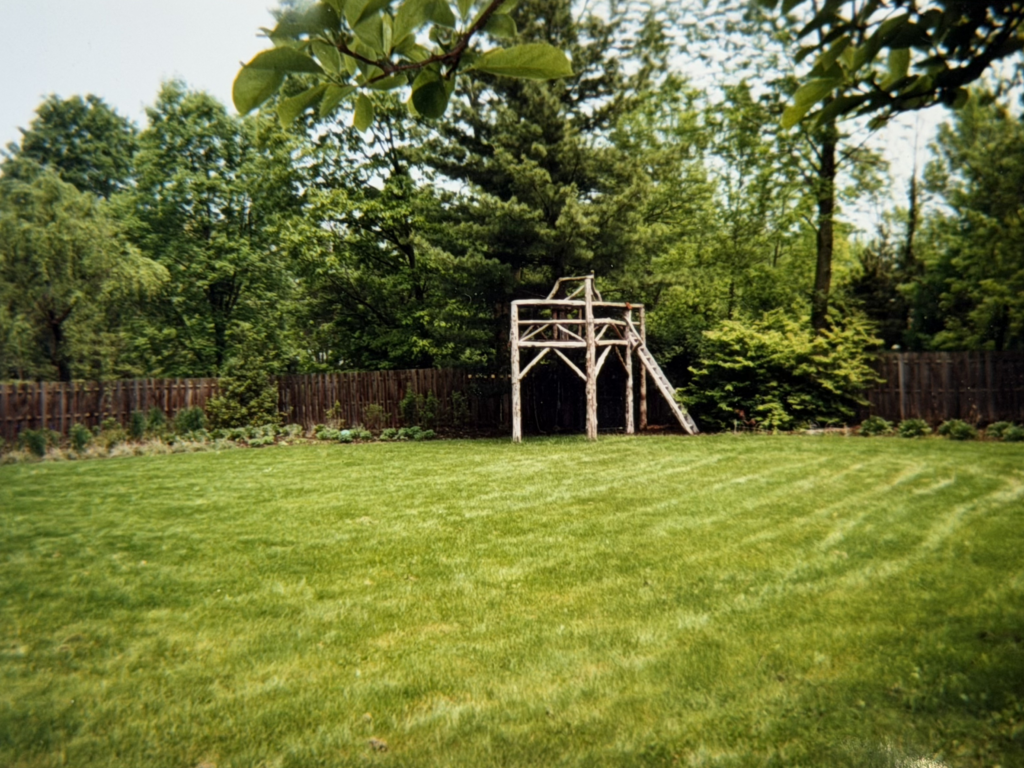
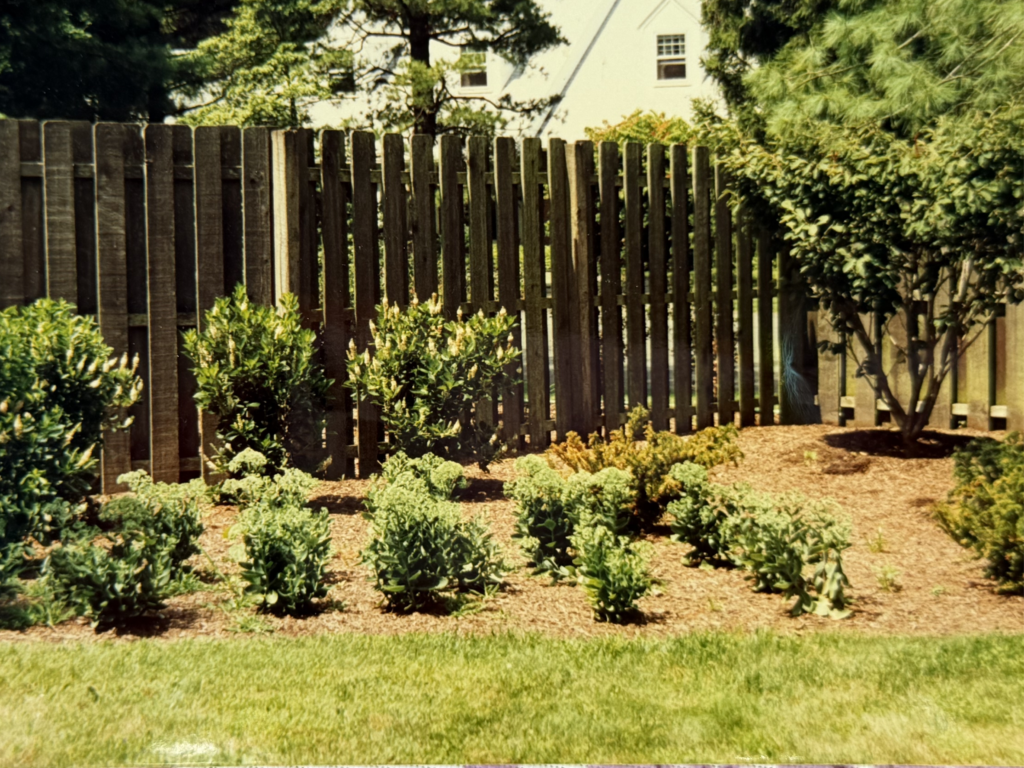
Eve’s backyard ~30 years ago
When Eve bought her property over 30 years ago, she knew she wanted to minimize the lawn. Eve shared, “I don’t see the point of lawns. [For me] it started with ‘Why do I need pesticides and fertilizers?’ I like contributing to and being part of a larger movement of people who are trying to change how they use their land.”
Eve worked with Kale’s Nursery (now Killian’s Outdoor Living Supply) to plant a perennial border in 1997. Nanci adds that back in the 80’s-90’s perennial/woody designs had more hybridized plant material, which has changed dramatically in the last decade. Walking the property with Eve and Nanci, it was clear to see that there was a mix of trees, shrubs, and natives with the usual invasives creeping in.
Despite this, Nanci said that Eve’s yard had “good bones to start with.”
Meadow in your mind
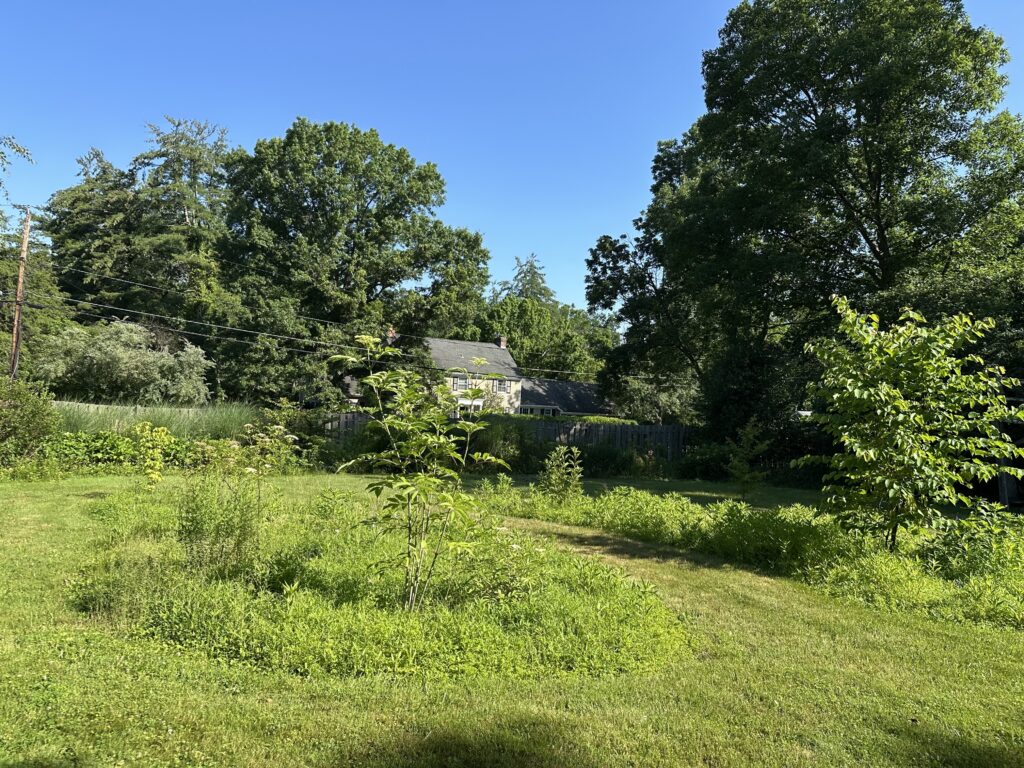
Eve has been attempting to create a meadow on her ¾ acre property for the past five years. In the first year, Eve worked with her landscaper to create large kidney-shaped areas in the grass and plant natives, primarily using a native perennial seed mix from big-box stores that claims to be native but not organic. Nanci cautions against using these seed mixes because they often contain several weed and invasive seeds, which are very difficult to eliminate.
Eve shared, “The first year it looked great–no flowers (I hadn’t seeded any either) but just nice tall grasses (or so I thought). The second summer, I began to notice (with my rudimentary knowledge of invasives) that it didn’t look quite the same – for example, some multiflora rose took root. It got worse over the next 2 years – and I realized that by NOT mowing (in combination with not using pesticides) I was providing a perfect home for invasives.”
Nanci shared that this is a challenge for many homeowners to understand: “The meadow in your mind isn’t what you’ll get. When people picture a meadow, they think of flowers—and that takes years”. Eve did not foresee the amount of invasives that would take over her lawn once the mowing stopped.
Eve said, “By late winter 2025, I knew I needed to do something—and that’s when I began looking in earnest for someone who knew a lot more than I did. When I attended the Home Expo, I made a point to talk with several vendors who specialize in different approaches to sustainable landscaping and decided to try working with Nanci, which has been a very good experience.
Nanci says removal of grass can be achieved in many ways:
1. Sterilize your grass with plastic, which can take 6-9 months to a year. Sterilization will also bake what’s underground.
2. Smother the lawn with a heavy layer of cardboard. You can use wood chips over it, but remove them when you’re seeding. If you plug with plants, it’s okay to leave the several layers of cardboard installed 6-9 months if you have the time. Fall is the best time to seed and plug. Then add wood chips to the bed after planting.
3. Stress the lawn with scalping, omit water, nutrients, and core aerate. Overseed with shorter natives in the grass i.e., Self-heal Prunella, Salvia lyrata, wild strawberry, rock soapwort, some asters. Mow approximately 2-4 times per year.
4. Sod cut the area, remove the cuttings. Allow the area to show what weeds you may have missed, eradicate and seed in the fall or early spring.
The cardboard and wood chips help to smother 80% of the weeds. Using mulch prevents moisture from reaching the plants, whereas wood chips keep the ground wet. This process can be done in stages to make converting your yard less overwhelming.
Garden planning
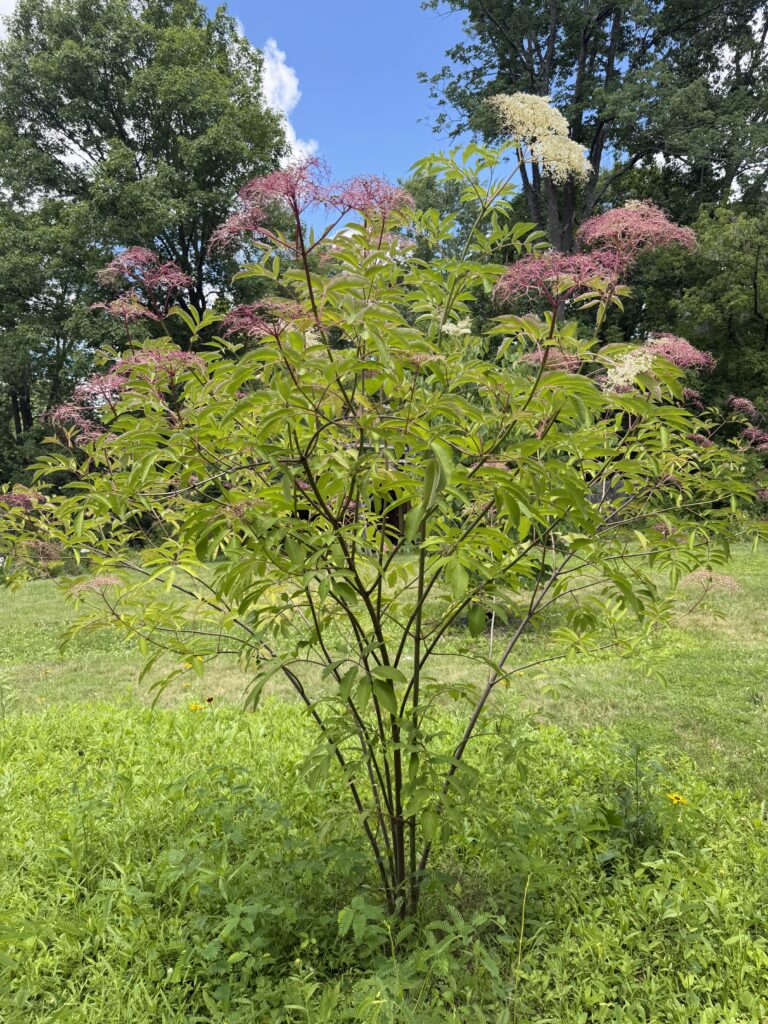
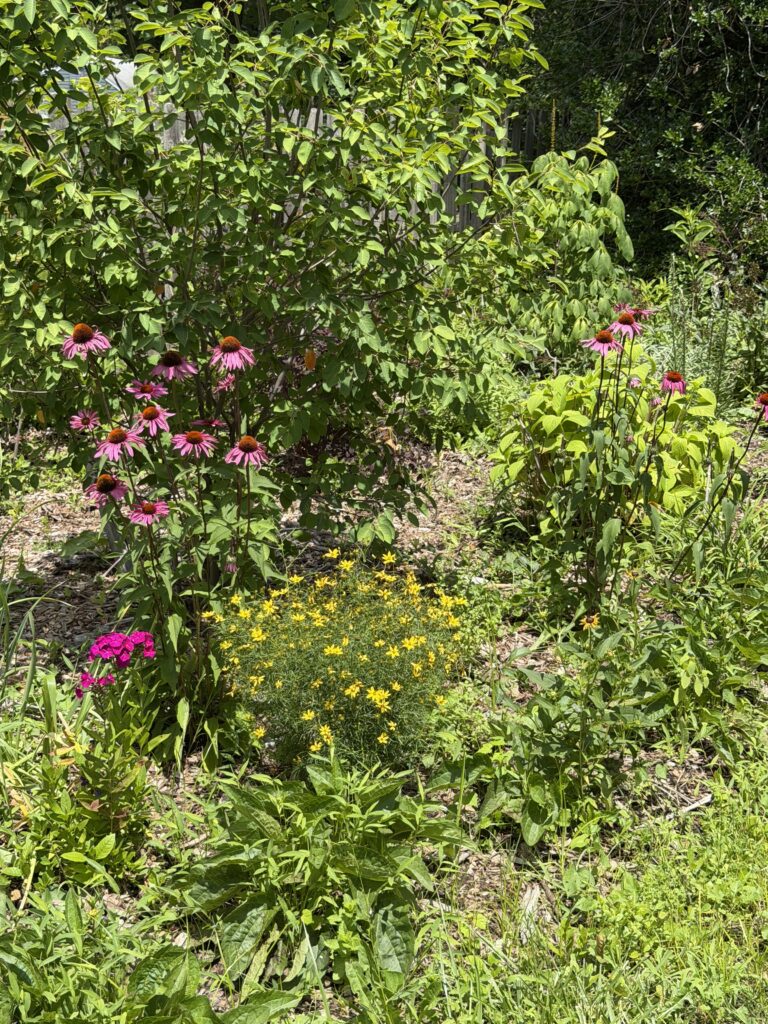
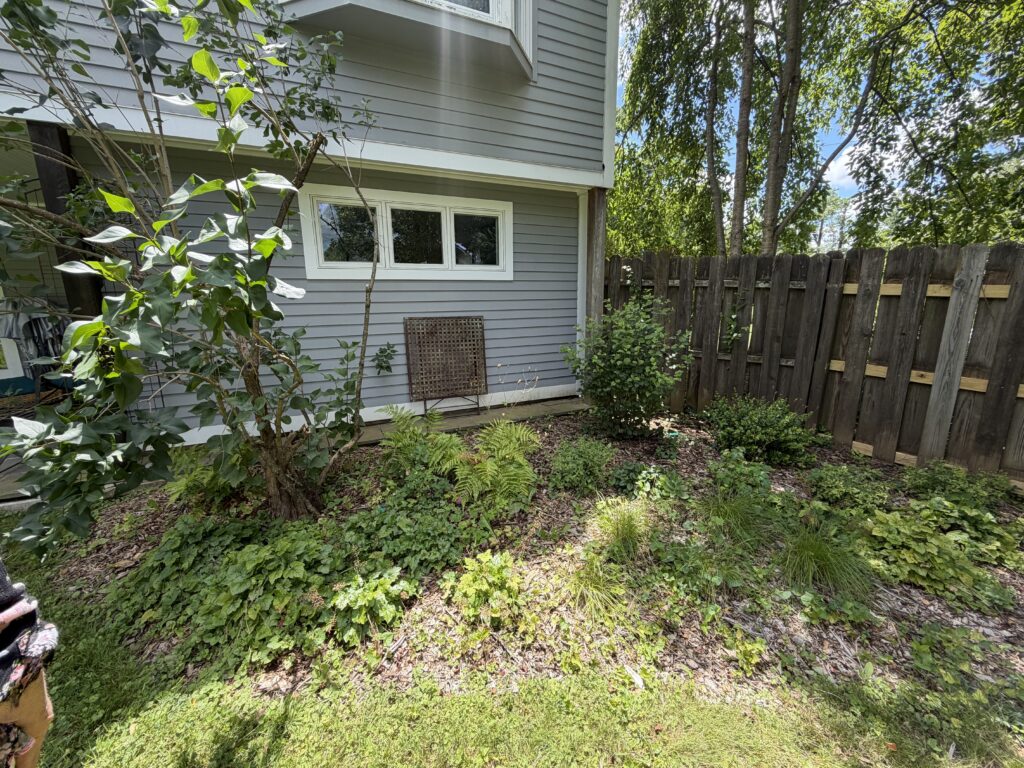
When planning what to plant, Nanci recommends thinking about what perennials, grasses, trees, and shrubs you’d like in your yard and mixing them up throughout your space. Think about each season and what will be growing in the spring, summer, and fall, and don’t forget the winter interest.
Suggested plants for early spring: Phlox divaricata, Virginia bluebells, Wood poppy, Spiderwort, Columbine, Zizia and some bulbs, too. Nanci suggests reading Doug Talamy’s book, Bringing Nature Home, and refers to his saying 80% natives, “keep your hydrangea if you love them.” But know that there are many native hydrangeas (Oakleaf and Smooth hydrangea) that support insects. “Know your plant before you plant,” Nanci said.
Nanci shared, “In the early Spring, flowers and native bees emerge from the ground, some bulbs like Daffodils, crocus, snowdrops, dwarf iris, and Glory of the snow, which are not always native but are not invasive.” This may be against some naturalists, again, its your garden and these do not create havoc. Native perennials like Virginia bluebells, Woodland poppy, Bloodroot, Columbine, and Moss phlox are just a few plants that offer fodder.
Don’t forget to plant trees and shrubs, as your backdrop to the garden. The shrub border offers flowers, berries and shelter for the garden you are designing which provide more nutrient value, especially for nesting caterpillars.” She adds, “You don’t have to be 100% native; if you want a ginkgo tree, plant a ginkgo tree. A 70-30% rule is fine.” Just make sure to avoid invasive plants like bamboo, honeysuckle, and others on the New Jersey Invasive Species Strike Team’s Do Not Plant list.
Meadow progress
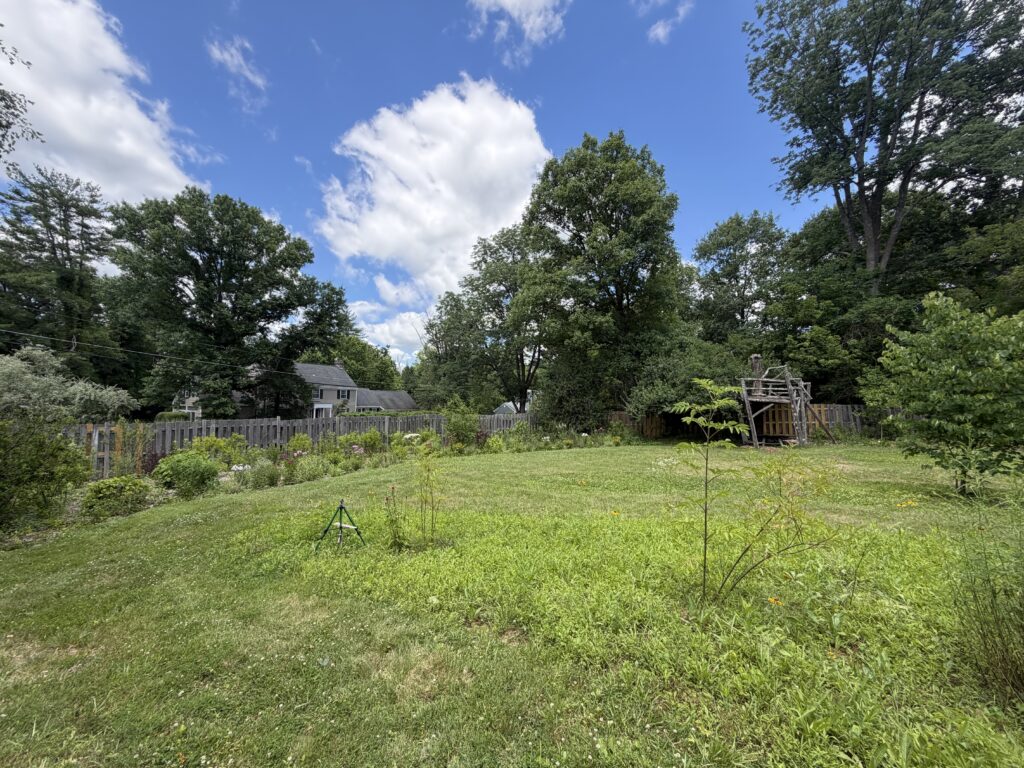
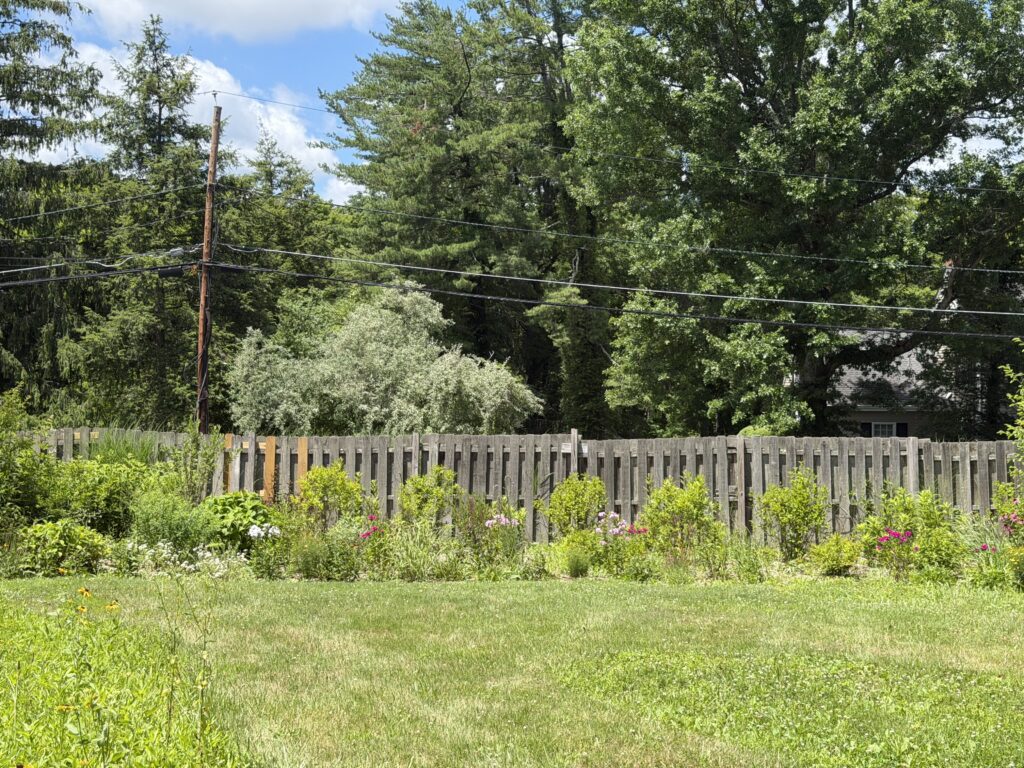
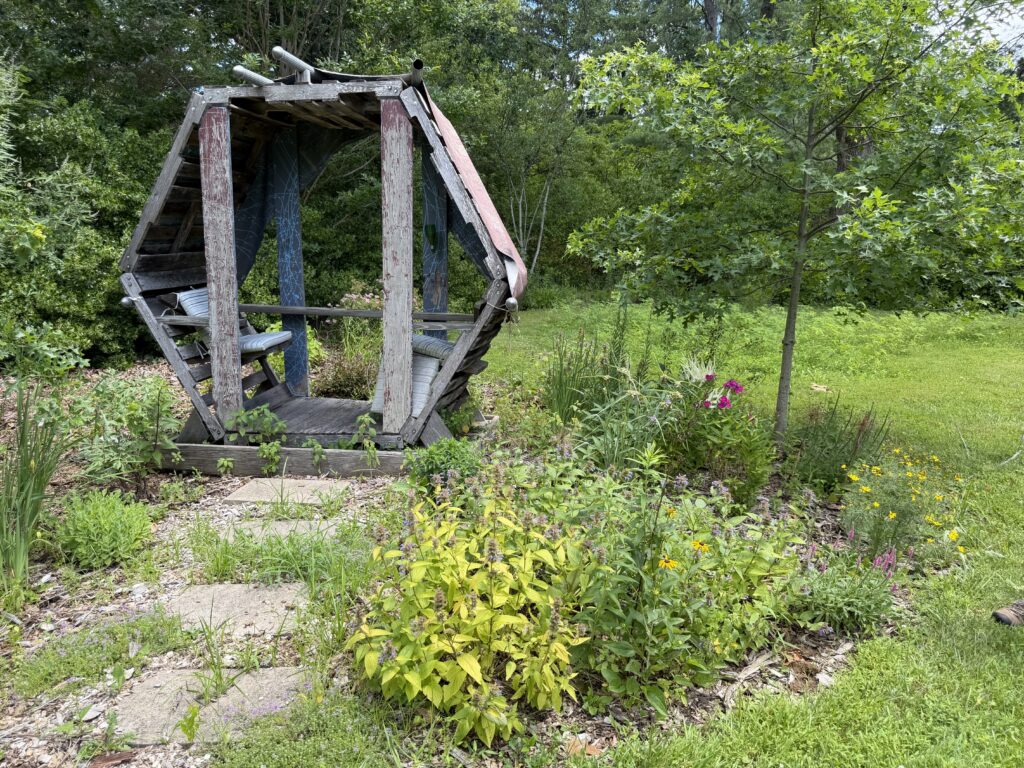
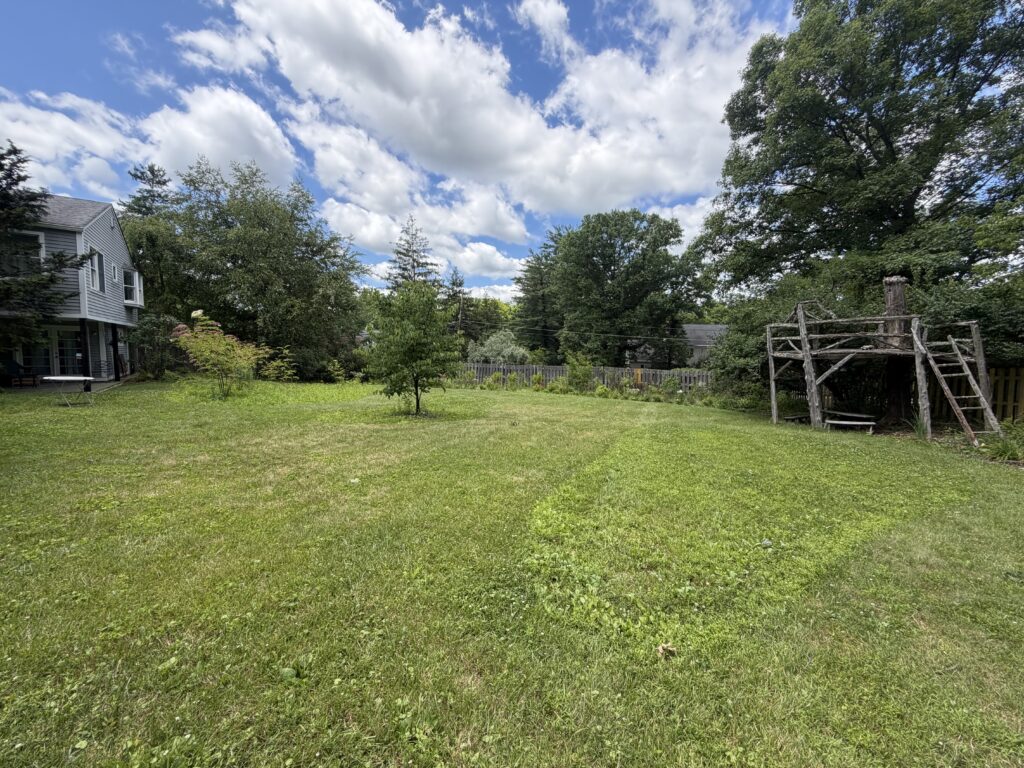
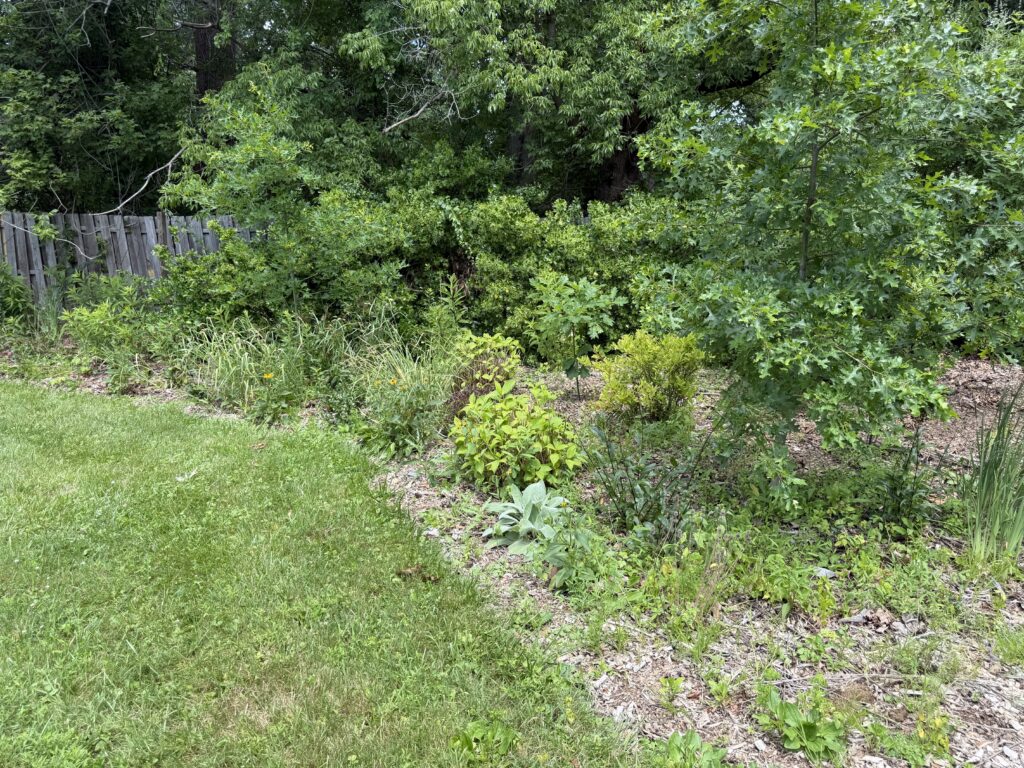
From 2025 to 2026, Eve worked with Nanci to remove several of the meadow shapes, while keeping a lot of the original plants and adding more natives. Four trees were transplanted, some from the front yard, to the backyard. Nanci added rear shrub borders that consisted of Viburnums, Ilex verticillata, and Aronia, all great plants that support early flowers for the bees, berries for the birds in the fall, and places for the birds to nest in the spring. Perennials were added to the borders, incorporating Eve’s plant list of Black-eyed susans, Spiderwort, Joe-pye weed, and other non natives installed by Kale’s years ago. A newly planted Serviceberry tree is already providing berries for birds. The most important thing to do now is to manage the invasives. While some natives will choke out the weeds (like Packera, Golden ragwort), it’s also important to remove invasives like lesser celandine, which Nanci said sometimes can only be removed by spraying with an herbicide early on before it flowers. She advises that when you see the leaves, spray before it gets too large. Removing Lesser Celendine manually is very difficult because you have to dig deep to remove the small tubers and bulbs.
Maintaining a meadow
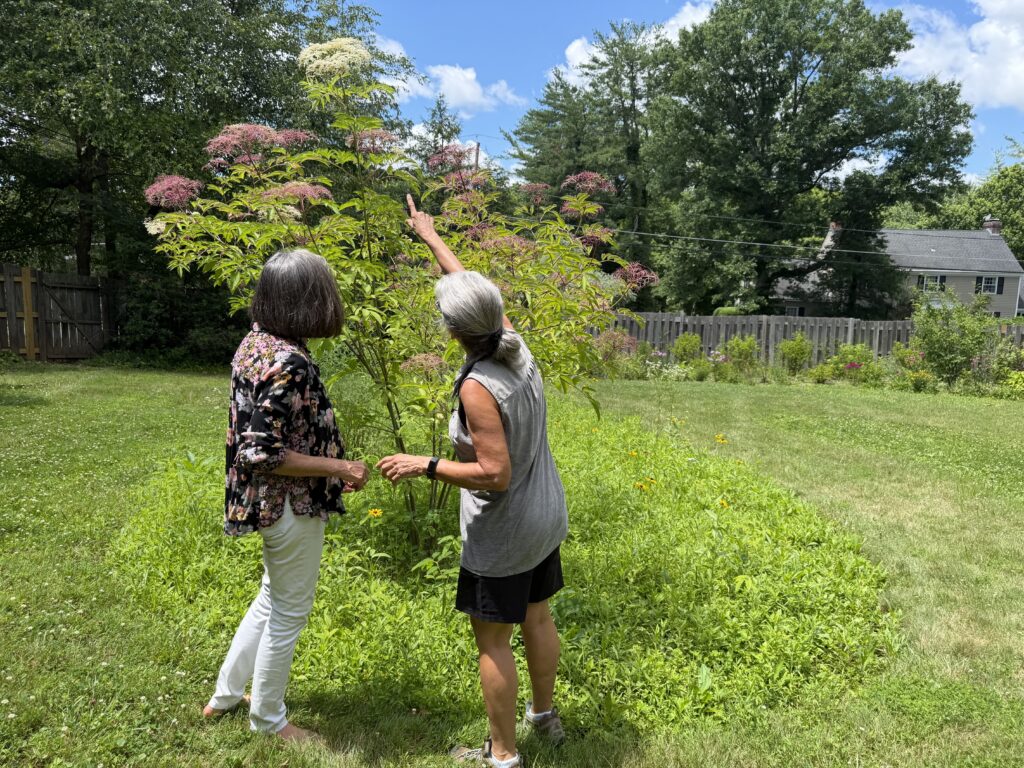
Once a native garden is established, the next step is proper maintenance. Both Eve and Nanci commented that many landscapers are unaware of how to maintain native plants properly. Eve also said that she didn’t want to put her landscaper out of business because he wouldn’t be mowing as much.
Talking with your landscaper about sustainable practices can be challenging. Nanci shared several things homeowners could ask their landscapers to do instead of mowing or other clean-up. Instead, landscapers could plant a small native garden, a native tree and shrub, add a rain garden to help with water retention, or divide perennials at the right time. There is plenty of work for those who open the door to new ideas. Nanci shared a few basic principles that homeowners can instruct their landscapers to follow:
- Don’t cut perennials with pithy stems. Cut them down to 12-18” for overwintering bees to nest. You will always be leaving the stems for the next generation of bees. Don’t worry, the stems will disappear from the garden before too long. Leave the grasses for winter. The queen bees use the canopy of grass to hibernate until spring. Emerging when the temperatures become consistent for a week or more of 50 degrees. Then you can cut the grasses. Do cut the fleshy plants, i.e., Hosta, Iris, Daylily.
- Fall is the best time for planting. Prepare beds in the spring, add perennials, grasses, and plant woody material in the fall. Add wood chips instead of double- and triple-shredded mulch. This mulch compacts so tightly that water will run off instead of percolating to the root system. Wood chips allow that rainwater to actually work into the plants. And if you notice Jumping worms, they don’t like the chips either.
- Mow high, 3-3.5” – let your landscapers know if the grass is too short. If you mow high, it can choke out the weeds.
- Save the fall leaves. Keep them and make a leaf pile in garden beds, with exceptions, i.e., small bulbs for spring, certain perennials like Tiarella, Heuchera. Spread leaves along plants in gardens; don’t worry about smothering. Be smart, do not place leaves on the trunks of woody plants. And don’t shred the leaves, you kill the overwintering butterflies and moths that hibernate in the leaves. Luna moths look just like a dried leaf! Come late spring, the leaves can be your mulch. If you must mulch, use natural wood chips as a border.
It’s helpful to work with a landscaping company that prioritizes sustainability. Homeowners can use Sustainable Princeton’s Sustainable Landscapers Resource List to find one. Please note: Sustainable Princeton provides this list for informational purposes, and it is not to be considered an endorsement of any business. Homeowners can also use this guide to have a productive conversation with their landscaper about sustainable practices.
Eve’s advice is to “learn what you can and find someone open to trying these practices.” It’s important to talk early on about expectations and budget, especially for larger projects.
While Eve’s meadow is just getting started, we’ll be checking in to provide updates on her meadow transformation. Eve mentioned these books inspired her to take action. Maybe they’ll inspire you too:
Do you incorporate native plants and sustainable landscaping practices into your garden? Whether large or small, we’d love to feature you! Reach out to us at info@sustainableprinceton.org